I spent seven years living inside Google Ads accounts. Small ecommerce brands, two home services companies, one SaaS startup that changed its offer every quarter. I built match-type structures by hand and mined search terms at 1am because that was the job. If you were spending $20k a month, I probably touched your account four days a week and billed you as if that attention were strategy.
Autonomous PPC software ends that arrangement. Not the AI-assistant kind that flags 47 recommendations for you to approve on Friday. The autonomous kind logs in and does the work: it shifts budgets, blocks wasted queries, tests copy, and moves bids when a signal appears. I used to tell clients no machine could be trusted to do that without supervision. I was wrong about the supervision part. I was right about one smaller part that still matters.
Autonomous PPC Means the Software Makes Changes
Autonomous PPC software changes your account without waiting for you. It connects through the Google Ads API, reads auction data, conversion data, search terms, budgets, and creative performance, then writes changes back into the account on its own.
Budgets move. Losing queries get blocked. Bids adjust. New tests launch. If nobody logs in for two weeks, the account should still improve. That is the whole test.
I frame it this way because the label has stretched thin. Almost every tool now calls itself AI. Usually, that means an advisor that watches your account and sends a list of suggestions. You still click approve. You still do the work. You still own the delay.
Autonomous means execution sits with the machine. You set the goals, budgets, and limits. The machine operates inside them around the clock, then shows you what it did and why.
Scripts, AI Assistants, and Autonomous Systems Are Not the Same Thing
I put everything sold as “automation” into three buckets because they can cost roughly the same while behaving nothing alike. Scripts follow rules; autonomous systems interpret signals and act within guardrails.
I wrote dozens of scripts. They were useful. They also broke the moment market conditions shifted, because a script has no judgment about why a rule fired.
| What you bought |
What it actually does |
Who does the work |
| Rules and scripts |
Executes fixed if-this-then-that checks on a schedule |
You write the logic, maintain it, and clean up when it misfires |
| AI-assisted tools |
Scores accounts, flags opportunities, and drafts recommendations for approval |
The tool suggests; a human approves and owns the delay |
| Autonomous software |
Reads signals continuously and writes changes into the account inside your guardrails |
The machine executes; a human sets direction and reviews the log |
Three years ago, I told a home services client the middle bucket was enough. Keep the advisor, approve changes twice a week, save the fee. I was wrong. Twice a week meant the worst waste ran for three or four days before we caught it. Then approvals piled up until we rubber-stamped them anyway.
If the tool cannot act while you sleep, you bought a to-do list, not management.
The Operating Loop: Find Waste, Reallocate, Test
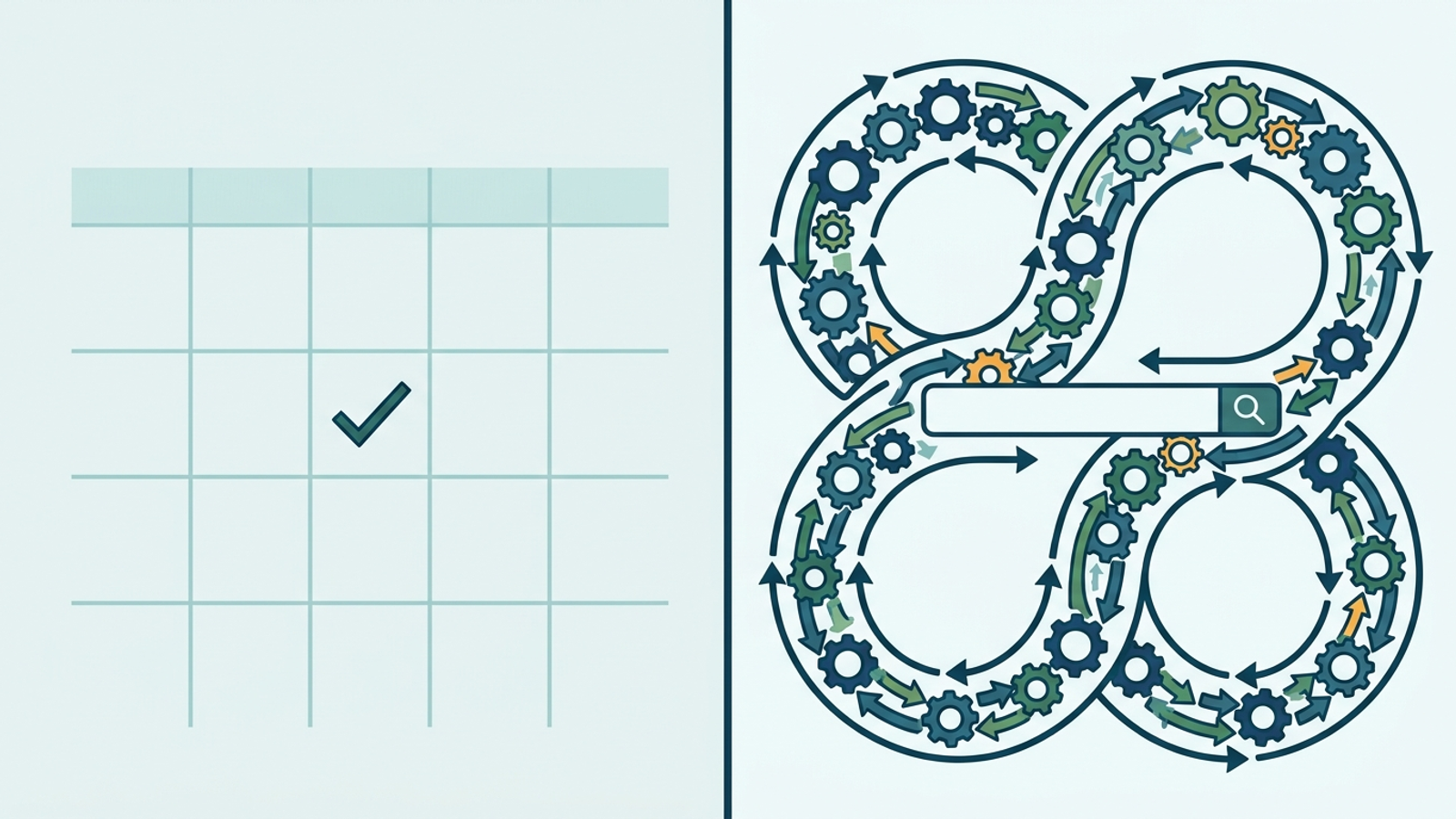
The mechanism is less exotic than the sales pages make it sound. The software holds read-and-write access to your account, pulls conversion data from your tracking, and runs a loop all day:
- Find waste.
- Move that money toward what converts.
- Test something new with the difference.
A human media buyer usually runs that loop once or twice a week. The machine can run it every few minutes. That frequency gap explains most of the performance gap.
Budget is where you feel it first. Say your brand campaign caps out at $180 a day while a broad non-brand campaign burns $400 with two conversions to show for it. I would have caught that on Thursday. An autonomous system catches it by 9:14am and reallocates the same morning.
Bidding works the same way, only tighter. Smart Bidding already adjusts bids in the auction, but someone still has to set targets, segment by intent, and stop feeding it junk conversions. The autonomous layer sits above that. It fixes the inputs Smart Bidding cannot fix on its own.
Targeting and creative close the loop. Search terms get mined continuously. Losers become negatives. Winners get split into their own groups with copy that matches the query. groas runs that full loop on Google Ads as a fully autonomous engine, with separate models for copy, budgets, intent, and testing running 168 hours a week while a named account manager holds the guardrails.
Cause first, effect second: because the loop never sleeps, learning compounds instead of resetting whenever your manager gets busy.
What the Machine Can Run Without Daily Intervention
Search-term mining is the clearest example. In one home services account I managed, 18% of spend every month went to close variants that never booked a job. I caught them in a monthly cleanup. An autonomous system catches them the same day because it reads every query against revenue, not against a schedule.
Negatives get added. Exact matches get built out. Budgets shift toward ad groups with a cost per booked job under target. No meeting. No approval chain.
Bid management, budget pacing, ad rotation, and creative testing follow the same pattern:
- Losing ads get paused after a few hundred impressions with no clicks.
- Winners receive more traffic.
- Budget moves away from campaigns that are spending without converting.
- Landing-page mismatches get flagged when conversion rate drops 30% week over week.
If the task repeats weekly and follows data, the machine already does it faster than you.
The practical test is the change log. If the system cannot show you 40 to 80 logged changes in a normal month, it assisted. It did not run.
Humans Still Own the Inputs That Matter
Here is the part the sales decks skip: the machine optimizes to the conversion you feed it, fast. Feed it form fills and it will buy you form fills at 22% lower cost in three weeks while your sales team drowns in junk.
I watched that happen in a SaaS account where demo requests looked cheap and qualified demos had fallen 14%. The fix was not better bidding. The fix was a human redefining the conversion as qualified pipeline and tying it to CRM stages.
Clean signal in, clean optimization out.
Humans also own the limits:
- Maximum daily spend
- Target CPA by product line
- Allowed geographies
- Claims legal will never approve
- The response when a landing-page swap breaks tracking
g roas puts it plainly: you set direction, budgets, and guardrails; the engine acts freely inside them and never beyond them.
That matches how I run accounts now. I do not approve every keyword. I approve the boundaries, read the weekly log of what changed and why, and step in when the business changes.
Automate the execution. Keep the judgment.
Why the Agency Model Starts Looking Expensive
Most agencies will not tell you this: you pay for hours whether performance moves or not. At $100 an hour, a $3,000 monthly retainer buys you maybe six hours of real attention spread across a junior buyer, a report, and a status call.
On percentage of spend, the math gets worse. Fifteen percent on $20k a month is $3,000 for work that shrinks as automation grows. What the deck calls account optimization, I call a Thursday login and a search-term export.
The spread between price and effort is the waste.
An autonomous system flips the cost structure because it works 168 hours a week without billing any of them. groas runs paid and organic search fully autonomously while a named account manager owns direction and guardrails, logs every action with reasoning, and charges a flat monthly fee instead of a cut of your spend.
The honest tradeoff is simple. You lose the comfort of a person to blame in a meeting. You gain execution that does not wait for Monday.
If your agency cannot show 50-plus account changes last month, you paid for reporting.
Five Checks Before You Trust an “Autonomous” Platform
I run five checks before I trust any platform that claims real-time optimization with no manual work. A good demo is not proof; the change log is proof.
- Ask for a change log from a live account. You want 40 to 80 logged changes a month with reasons attached, not a scorecard.
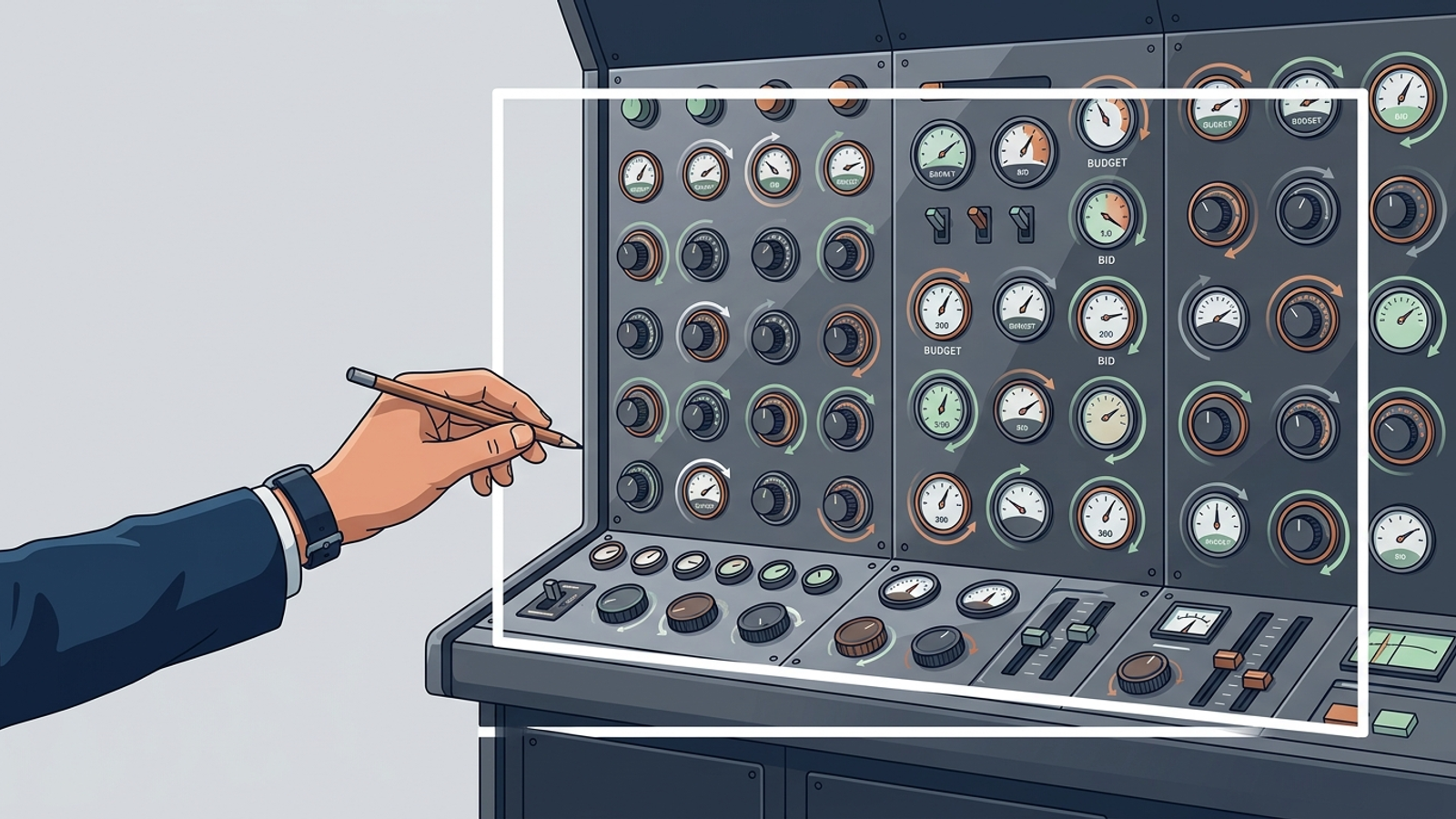
- Ask who sets the limits. You should set maximum spend, target CPA by product, geographies, and blocked claims. The system should prove it never acts outside them.
- Ask what it optimizes toward. If the answer is clicks, CTR, or raw leads, walk away. You want qualified pipeline, booked jobs, or closed revenue.
- Ask how it charges. A flat monthly fee with no setup cost keeps incentives clean. A percentage of spend pays the manager more when you spend more, which is exactly backwards.
- Ask who answers for the result. A named strategist with a weekly breakdown beats a support queue every time.
This will not work for everyone. Here is who should skip it:
- You spend under $2,000 a month across three campaigns. Smart Bidding plus one hour of review a week covers you.
- Your tracking is broken. Fix that first, because autonomy on bad data just buys bad conversions faster.
- Legal must approve every headline. Keep a human in the approval chain.
For everyone else with real spend and real complexity, the test is simple: run it for 30 days against your current setup and compare cost per qualified lead, not cost per click.
Buy execution, not advice.
FAQ: The Questions Worth Asking Before You Buy
Can It Run With Zero Logins Once Set Up?
For weeks at a time, yes. I have left autonomous accounts alone for 14 days and come back to cleaner search terms, tighter budgets, and a log of 30-plus changes.
Zero oversight forever is not the pitch. You still set maximum spend, target CPA by product line, and blocked geographies. You still fix conversion tracking when your dev team breaks it. You still decide when the offer changes.
The machine owns the daily loop. You own the business inputs that loop reads.
What Platform Should I Use for Real-Time Google Ads Optimization?
Start where the money goes. If 70% of your spend sits in Google Search, buy a system built for Search first. Social-first tools treat Search as an extra tab and miss intent detail.
groas runs Google Ads continuously and now runs ChatGPT Ads on the same engine, which fits how buyers actually search in 2026. Search auctions clear in seconds, so a system that reacts in minutes prevents more waste than one that checks in on Thursday.
How Fast Will CPA Move?
Give it 30 days. Weeks one and two clean obvious waste: blocked queries, capped losers, and reallocated budgets. Weeks three and four show up in cost per qualified lead.
Say you spend $20k a month with 15% obvious waste. That is $3,000 back in play before creative tests even kick in. If you want that test without hiring another manager, apply for a free trial and read the change log after week two.
The log tells you in five minutes whether you bought execution or advice.